Showing posts with label places in india. Show all posts

Friday, 20 April 2012

Shimla-Queen of Hills


Shimla is the capital capital of scotland- Himachal Pradesh. The city of Shimla is made over several hillsides and hooking up side rails. The key hillsides are Jakhu ( 2,455 meters ), Prospect Hill ( 2,328 meters ), Observatory Hill ( 2,350 meters ), Elysigim Hill ( 2,466 meters ) and Summer time Hill ( 2,300 meters ). A location of peace and pleasure, Shimla is really a tourist resort in tangible sense around the globe. The very best season of the season here's fall however the springtime runs a detailed second. Shimla is associated with air, rail, and road traffics. Shimla under snow is an excellent sight also it provides the unique attraction of the outside roller skating rink. Even the legendary Ridge under snow and snow sports at Kufri make Shimla an excellent winter location.

Sightseeing places in shimla

The Mall:

The Mall, like the majority of hill stations in North India, may be the primary shopping center of Shimla. Additionally, it has numerous restaurants, clubs, banks, bars, Publish Offices and tourist offices. The Gaiety Theatre can also be situated there. People walk up and lower the Mall gradually, preventing to gossip, because it is the primary meeting spot for everybody. The Ridge and Scandal point would be the two primary meeting points in the Mall.

Christ Chapel:

Found on the Ridge is Christ Chapel, the second earliest chapel in Northern India. It features a very regal appearance and inside you will find stained glass home windows which represent belief, hope, charitable organisation, fortitude, persistence and humbleness. Christ Chapel is really a place all site visitors should spend a while in.

Jakhu Hill:

2 kms. from Shimla, in a height of 8000 foot, Jakhu Hill may be the greatest peak while offering an attractive look at the city as well as the snow-covered Himalayas. Towards the top of the Hill, is definitely an old temple of Hanuman, also is the house of numerous playful apes waiting to become given by all site visitors.

Shimla Condition Museum:

The Museum, that was opened up in 1974, has attempted to project hill-out and also the cultural insightful the condition. Art objects within the Museum collection are mainly associated with art, the archaeology of gortyn and cultural anthropology of Himachal along with other states asia. At the moment Museum, has about 9000 objects in the collection. In the start, museum began with four art galleries. Since that time more art galleries happen to be added. These art galleries have to do with Pre- historic, Indian The archaeology of gortyn, Woodcarvings, Himachal The archaeology of gortyn, Pahari Miniature Works of art Monuments, Photographs, Rajasthan works of art, Bronzes, Numismatic, Arms Gallery, Gandhi Gallery, Philatelic, Anthropological, Contemporary Art & Wall Works of art gallery. Additionally to those art galleries museum has one exhibition hall for organizing the exhibition along with other museum activities.

Indian Institute of Advanced Studies:

This institute is located within the Viceregal Lodge, that was built-in 1884-88 throughout the British occasions. It's spacious gardens and it is ringed by beautiful pine trees. All is calm and peaceful the perfect atmosphere for students of literature or politics.

Summer time Hill:

Situated far away of 5 kms. in the Ridge may be the lovely township of Summer time Hill in a height of 6,500 foot. around the Shimla-Kalka railway line. Mahatma Gandhi resided during these quiet surroundings throughout his visits to Shimla. Himachal Pradesh College can be found here.

Annandale:

Developed because the playground of Shimla, Annandale is 2-4 kms. in the Ridge in a height of 6,117 foot. It's a favourite place for cricket, picnics and also the princely bet on polo.
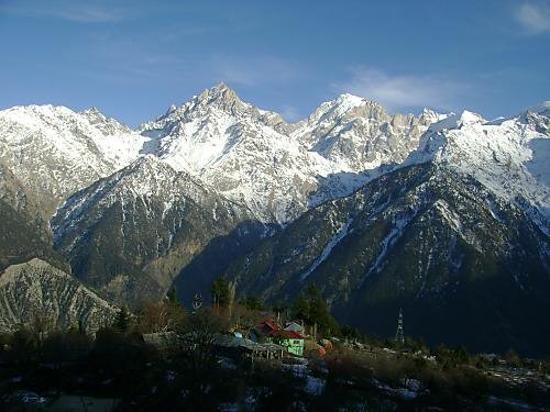

Around Shimla

Tara Devi:

11kms. in the Shimla bus-stand. Tara Devi includes a temple devoted towards the goddess of stars on the top from the hill. There's a military Dairy Town here along with the headquarters of Bharat Scouts and Guides. In a height of 6,070 foot. Tara Devi is a perfect place for an individual wanting peace plus some relaxation.

Sankat Mochan:

A well known Hanuman temple is situated here. We obtain a great look at Shimla in the temple. It may be arrived at by vehicle or by walking.

Mashobra:

13 kms. from Shimla, Mashobra has lots of excellent have a picnic spots. Mashobra offers ideal walks amongst oak and pine trees. Mashobra may be the site from the annual Sipi fair in June. The closest relaxation home is at Craignano that is 3 kms. from Mashobra, and it is an attractive location.

Naldehra:

23 kms. Within skyline etched with conifers, Naldehra provides a well groomed nine-hole Course undulating hillsides and giant deodars, turn it into a unique place for picnics. Regular bus and taxi run. HPTDC Restaurant, Hotel Golf Glade and Club.

Tattapani:

43 kms. Found on the bank of river Sutlej it established fact of their hot springs. Regular bus and taxi run.

Wildflower Hall:

13 kms. Nestling among sylvan surroundings, the stately Hotel Wildflower Hall from the HPTDC offers an impressive look at the mighty Himalayas and perennial snows. Charming in summer time and engaging in fall, when winter casts its layer of snow Wildflower Hall assumes an ethereal look.

Fruit Research Station:

18 km. The greatest fruit research station in northern India.

Kufri:

16 kms. Well-known because of its ski slopes. Instructions good sights. Additionally, it includes a Potato Research Station. Shimla comes with an added attraction of Small zoo amongst dense forest towards the vacationers in which a rare variety of wildlife and pheasants species generally present in Himalayan forest region happen to be stored in natural habitat. Spread over a place of twenty hectares of land with wealthy plants and creatures about 140 wildlife including pheasants of various verities ‘Monal’ the Condition bird of Himachal Pradesh and among the endangered types of Himalayan region continues to be another points of interest of the zoo been placed securely within this small zoo. Another attraction of the zoo are Tibetan wolf, Brown Bear and Woofing Deer. You will find other popular wildlife species within the Small zoo for example leopard, Ghoral, Samber, Himalayan Thar, Yak, black bear and quantity of pheasants types. Himalayan Character Park continues to be setup at Kufri in 1992 that is spread in 90 hectare area and small zoo continues to be placed in this Park.

Indira Holiday Home:
18 kms. Deodar forests in an altitude of two,623 metres. Small zoo, and yak and pony riding.

Chail:

43 kms. (via Kufri) and 62 km. (via Kandaghat). Chail, in a height of two,250 metres, combines the charm and sweetness of the remote and peaceful mountain resort using the splendor and magnificence of the princely reserve. Chail was the summer time capital from the Maharaja of Patiala before Independence. The verdant forests around Chail are alive with lots of types of wild birds and deer.

Barog:

55 kms. A verdant host to considerable scenic charm and sweetness giving extensive sights of high mountain tops stretching range after range and valleys swooping lower the Haryana and Punjab flatlands.

Kasauli:

61 kms. from Chandigarh, 77 kms. from Shimla, Kasauli (1,927 metres) is charming and quiet a perfect spot for individuals looking for peace and relaxation.

Solan:

48 kms. A well known place, named after Shoolini Devi is really a Mushroom Town of India. The Dr. Y S. Parmar College of Horticulture & Forestry, unique in Asia, can be found here.

Wednesday, 18 April 2012

Diamond Harbour – weekend picnic spot near Kolkata


Diamond Harbour is a perfect weekend gateway and an ideal picnic destination near Kolkata, the capital town of west Bengal. This small town is indeed a perfect place to relax and unwind at the end of a busy and hectic week. Diamond Harbour was more a picnic spot till recent times, but in the past few years it has developed into a popular weekend tourist spot, thanks to the development of a number of private resorts and a 5 star hotel. Watching sunrise and sunset at Diamond Harbour is an awesome experience which no words can describe.
sunset-diamond-harbour-west-bengal
Magnificent view of sunset at Diamond Harbour

Where is Diamond Harbour?

Diamond Harbor, the popular weekend tourist spot is located in South 24 Pargana district of the Indian state of West Bengal. This fast developing tourist destination is just 52 Km from south of Kolkata and is just one and a half hour drive from the metropolis.

About Diamond Harbour

The picturesque small town of Diamond Harbour with a touch of history offers spectacular view of the river Hoogly. At Diamond Harbour, the Rupnarayan River joins the Hoogly and bends south and widens out to a form a huge expanse of water before meeting the Bay of Bengal. A little further down, the Haldi River joins it as well and the whole place seems to be a huge ocean of water.
Diamond Harbour was earlier known as Hajipur. It was the Britishers who renamed the place during the days of East India Company. The ruins of the fort of Chingrikhali at Diamond Harbour speak of its Portugese connection and the presence of an old lighthouse adds to the historic value of the place.
The mesmerizing beauty of the place at the confluence of Hoogly (tributary of Ganga) and Bay of Bengal is simply wonderful. It is indeed a refreshing and revitalizing experience to stand by the long stretch of water and experience the panoramic beauty of the nature. During sunset, the beautiful natural vistas of the place and the sun setting down the horizon create a colourful canvas that makes an indelible experience on the mind. Watching Sunrise and Sunset at Diamond Harbour is something which creates an indelible experience on the mind and soul of every tourists visiting the place. For city dwellers who wish to escape from the humdrum of the city life, Diamond Harbour is indeed a perfect place to spend some quality time with friends, family and your loved ones.

Sightseeing in and around Diamond Harbour

Fort – Ruins of the old fort at Diamond Harbour is a must visit spot for every tourists visiting Diamond Harbour. The fort was most probably built by the Portugese or French traders in 16th Century and was mainly used as Warehouse to store merchandise before loading on the ships to Europe. Though presently the fort is in ruin but is undoubtedly a major attraction for tourists.
fort-ruins-diamond-harbour-west-bengal
Ruins of Diamond Harbour

Kapil Muni Temple – The famous temple of Kapil Muni is situated on the Sagar Island and waterways is the only mode of transport. Sagar Island can be approached from either Harwood point or Namkhana jetty. Harwood Point is just 35 Km from diamond Harbour while Namkhana is another 13 Km more.
Considered to be an important and popular Hindu pilgrimage destination, the temple was built by Swami Ramanand in 1437. The temple is dedicated to the sage Kapila Muni who according to Hindu mythology was responsible for bringing Ganges down to the earth from heaven. The oldest temple was completely destroyed by a tornado. Subsequently, twice the temple was rebuilt but got destroyed as well. In the year 1961, the then Chief Minister of West Bengal, Shri B.C.Roy again setup the Kapil Muni Temple at Sagardwip Island for the fourth time.
temple-kapil-mni-ganga-sagar
View of Kapil Muni temple at Sagardighi

On Makar Sankranti day (middle of January), thousands of pilgrims from all over India and other countries as well rushes to Sagardwip to have a holy dip at the confluence of the Bay of Bengal and river Ganga so as to wash away all the sins of their life.
Bakkhali – The beach resort of Bakkhali is at a distance of about 55 Km from Diamond Harbour and takes about 2 hours to reach. Though in the last few years this Bakkhali has developed into a popular beach resort, but apart from weekend one will not find many tourists here. With gentle waves, white sand and coconut tree around, this secluded beach is indeed a place to relax and rejuvenate. Presence of a number of hotels and resorts makes the place a perfect weekend destination.
beach-sand-bakkhali-west-bengal
Bakkhali beach near Diamond Harbour

How to reach Diamond Harbour?

By Air – Netaji Subhas Chandra Bose International airport at Kolkata at a distance of about 65 Km is the nearest airport of Diamond Harbour. In order to reach Diamond Harbour from the airport the best option is hiring private vehicle according to his or her requirement.
By Rail – From Sealdah station there are trains at regular intervals that connects Diamond Harbour with the metropolitan town of Kolkata. The entire journey takes around one and a half at themost.
By Road – Diamond Harbour is well connected with Kolkata by good road and regular buses are available from Shahid Minar bus terminus and as well as Babughat. The road condition is quite and the road is via Khidirpore bridge.

Where to stay at Diamond Harbour?

Sagarika Tourist Lodge – Undoubtedly the best staying option at Diamond Harbour is West Bengal Tourism Development Corporation (WBTDC) run Tourist Lodge, Sagarika. Located on the river bank, Tourist Lodge Sagarika is known for its amenities, hospitality and cleanliness in spite of being a budget accommodation.

Sunday, 15 April 2012

Darjeeling Trip: a Wonderful Summer Holiday!!!


Divine nature has blessed all the places on this earth. Beauty should lie in your eyes to admire some place or the other.Planning for your honeymoon, or a relaxing family trip, or even a freak out vacation with friends – choose a north east India tour package, and visit Darjeeling. This fascinating place is best known for Buddhist monasteries, tea plantations, ride on the chairlift, shopping in the colorful markets and trekking to high altitude spots. Popular as one of the most magnificent hill resorts in the world, Darjeeling also has a unique feature of toy train, which takes you from Jalpaiguri to Darjeeling through scenic valleys.Land of Thunderbolt is the name given to Darjeeling which is also called Queen of Hill stations.
The Mall Road, Himalayan Mountaineering Institute, Shingamari Ropeway, Zoological Park (Darjeeling Zoo), Mahakal Dara Temple, Tiger Hill, Batasia Loop, Gangamaiya Park, Rock Garden, Happy Valley Tea Estate, Ava Art Gallery, Japanese Temple (Japanese Peace Pagoda), Dhir Dham Temple, Mirik Lake and Darjeeling Tea Estate are some of the attractions of Darjeeling which every tourists prefer to visit during their India tour .
Shingamari Ropeway:
Situated just 100 mtrs away from North Point School, it is the oldest passenger ropeway that connects Singla Bazaar and Darjeeling. Visitors coming to Darjeeling enjoy the thrilling ropeway tour to see the scenic natural beauty and the sprawling tea gardens from the height of 300-400 mtrs above. You will get awe struck once the chair starts moving slowly down to the Singla Bazaar. Enjoy the thrilling but memorable Shingamari ropeway tour and make the memories to cherish your Darjeeling tours for lifetime.
Zoological Park (Darjeeling Zoo): 
Padmaja Naidu Himalayan Zoological Park or the Darjeeling Zoo is the home of various wildlife species. It is the new home of Siberian Tigers, Red Panda, Tibetan Barking wolf, Himalayan Pheasants (Kallis), Himalayan Deer, etc. Nearby the zoo there is a famous Snow Leopard breeding centre. Take a delightful walk for the mall road to the zoo which is just 2kms away from the mall road or the center of the Darjeeling.
Mahakal Dara Temple: 
It is the famous temple of Darjeeling and the local people believe that it is because of the Temple peace and prosperity is always at its full bloom in Darjeeling. Every day local people go to the temple and offer prayer at the shrine of Mahakal Baba. You will also catch the sight of monkey playing tricks but be little careful with the monkey while visiting the temple.
Tiger Hill:
Tiger Hill, known also as Surging Sea Hill, is a large hillock covering some14100 square metres (over three acres) and is 36 metres (118 feet) in height. Climbing the hill, you will find a number of historical sites some of which can be traced back over 2500 years to the founding of Suzhou. Although the hill is relatively small it has rich history. These are just some of the highlights of what is to be found there.
Batasia Loop:
Batasia Loop is a famous loop situated on the Darjeeling Himalayan Railway between Ghoom and Darjeeling, in West Bengal. Constructed in 1879 it is an engineering marvel and feat where the train takes a very unique turn. The meter-gauge toy train winds its way over this loop. Batasia Loop is just five kilometers from Darjeeling.
Darjeeling Toy Train:
Once in a lifetime, all of us must have experienced the joyful toy train ride in local fairs or in any amusement park. But, if you want to experience the real toy train, traversing through the zig-zag mountains paths and scenic beauty of Mother Nature, than you must visit Darjeeling.
Dhir Dham Temple:
Built in 1939, Dhirdham Temple is situated near Darjeeling Railway Station. It was constructed by Rai Saheb Purna Bahadur Pradhan. The temple architecture has been inspired by the famous Pashupatinath Temple at Kathmandu in Nepal. There is a statue of Lord Shiva outside the main temple. It depicts “Pancha Bakram Tri Netram” which means five different facial expressions of Lord Shiva in different moods and the third eye. Every day, Aarti is held at 08:00 hrs and 18:00 hrs.
Darjeeling Tea Gardens:
While in Darjeeling a visit to any nearby Tea Garden to watch the actual process of the manufacturing of Darjeeling Tea is worth it. Some of the Tea Gardens also sell their packet teas. There are about 70 tea gardens in this hill region and the most accessible one  is the Happy Valley Tea Estate, which is about 3 km from the town or within a walking distance of about 40 minutes (Closed on Monday).

Saturday, 14 April 2012

Kolhapur-largest no.of mercedes owner are here


Kolhapur is an important city in Maharashtra, with a rich history dating back to 300 years, and is situated on the banks of the river Panchganga. The name Kolhapur is famed all over India and abroad for its various specialties like Kolhapuri Chappal, Kolhapuri cuisine and Kolhapuri gur. Legend says that Kolhapur is named after the wish of a demon named Kolhasur, who was killed by Goddess Mahalakshmi. 

The historical Kolhapur city was an important princely state of Bombay presidency of British rule. The Bhonsle dynasty who ruled during this period was given 19 gun salutes and so Kolhapur was named as 19 gun state during that period. Present Kolhapur city is noted for its political, cultural, commercial and religious importance. 

Kolhapur is renowned as capital of Maratha film industry and has borne the credit as the place where the first feature film in India - Raja Harischandra was conceptualized. The region is renowned for the localized version of wrestling known as Kushti and also renowned for art and education. Kolhapuri footwear, Kolhapuri jewels and Kolhapuri tobacco are world famous products exported from Kolhapur. A personalized version of necklace known as Kolhapuri Saaj is a specimen of Kolhapur jewel products. 

Panhalgad hill station, Irwin Agricultural MuseumMahalaxmi temple known as Dakshin Kashi and Bahubali Jain temple are some of the nearby attractions. Shopping is a wonderful experience in Kolhapur. Apart from the specialized items, all types of textile products, artifacts and gift items are available plenty in big and small malls in Kolhapur.


Thursday, 12 April 2012

KERALA, GOD'S OWN COUNTRY

With the Arabian Sea in the west, the Western Ghats towering 500-2700 ms in the east and networked by 44 rivers, Kerala enjoys unique geographical features that have made it one of the most sought after tourist destinations in Asia. An equable climate. A long shoreline with serene beaches. Tranquil stretches of emerald backwaters. Lush hill stations and exotic wildlife. Waterfalls. Sprawling plantations and paddy fields. Ayurvedic health holidays. Enchanting art forms. Magical festivals. Historic and cultural monuments. An exotic cuisine... All of which offer you a unique experience. And what's more, each of these charming destinations is only a two hour drive from the other. A singular advantage no other destination offers. 

Kerala, India's most advanced society: With hundred percent literacy. World-class health care systems. India's lowest infant mortality and highest life expectancy rates. The highest physical quality of life in India. Peaceful and pristine, Kerala is also India's cleanest state. 


What To See In Kerala Overview
Kovalam BeachAlong the Western Ghats of India and abutted by the Arabian sea is located the beautiful state of Kerala. The place, sometime referred as God's Own Country, withholds an unmatched beauty in the southern part of the sub continent. Amidst the sprawling gardens and waterways are located the treasure lands of Kerala. 

Kerala SightseeingBR> The scene is dominated by landscapes and picturesque view of rivers fed by monsoons. Among the Kerala places to visit are Backwaters, laid out beaches abutting the Arabian Sea, hill stations, ancient temples, spicy treats and diverse culture is what makes the place stand out in the tourist map of India. With moderate tropical climate all favors seem to be going its way. The pleasant weather is a precursor of productivity and growth enjoyed by the region. Kerala is green, it is chilling and one peaceful destination in the Indian sub continent. Trivandrum, Kochi and Kozhikode.

Places To Visit in Kerala 
From time immemorial Kerala has been occupying a prominent space in the world tourist map. The place better known for trade and commerce withholds bounteous treasures that stood undiscovered until recently. For its alluring destinations the place was covered by the reputed National Geographic Traveller, as one of the 50 destinations in the world worth visiting. beautiful lakes, beaches and low lying hills. 

Kerala Tourist spots stand par excellence, encompassing beautiful lakes, beaches, low lying hills and unforgettable countryside. The tourist places in Kerala are spread at large in the state. These destinations are either grouped based on common features or according to their geographic location. In terms of features the destinations are categorized as Backwater Destinations, Beaches, Hill Stations, Wildlife Sanctuaries and Historic Places. 

Things to see in Kerala: Alapuzzha wise the destinations are included as important cities, districts or townships. Some known destinations as such include Alappuzha, Kochi, Kollam, Kovalam, Kozhikode, Kumarakom, Munnar, Thekkady and Trivandrum. The backwater destinations include Alappuzha, Kochi, Kollam, Kozhikode and Kumarakom. Alappuzha and Kovalam, further, exist as beach resorts. Kumarakom is known for its bird sanctuary and Munnar as a popular hill resort. Amongst the popular destinations backwaters are the most sought-after by tourists. The entire state is a complete package, incorporating nature at its best. The major tourist destinations of Kerala include:

Trivandrum : Previously called Trivandrum, the capital city of Kerala lies in the southwest coast of India. The major attractions of this historical city are Sree Padhmanabhaswamy temple, Kanakakunnu Palace, Govt. Museum, Vizhinjam and Veli lagoon. 

Kochi : The port city of Kochi is regarded as the commercial capital of Kerala. Attractions of Kochi include Mattancherry Palace, Fort Kochi, Ernakulam city

Alappuzha : Also known as Alleppey, Alappuzha is another magnificent backwater destination of Kerala with facilities for boathouse cruises. The backwaters and Alappuzha beach are major attractions here.

Kovalam BeachKollam : Situated on the banks of Ashtamudi lake, Kollam is one great place at Kerala. The Thirumullavaram Beach further attracts the attention of the tourists at Kollam.

Kovalam : Some 13 kms south of the capital city lies this beautiful town. The beaches located in the region are among the best in Kerala.

Kozhikode : Kozhikode, with its excellent beach and biological diversity is one of the best places in Kerala. The place features several middle age communities that settled in this town.

Munnar : Munnar is a serene hill station perched in the Kannan Devan hills. The hill station located at an altitude of about 1524 kms provides for an excellent health resort and an adventurous tour.

Kumarakom : Kumarakom is yet another beautiful place featuring backwaters and lush paddy fields. The bird sanctuary established here forms a popular attraction.

Thekkady : Bordering Tamil Nadu state, Thekkady is a wonderful destination in the state of Kerala. The famous Periyar Lake and Periyar Wildlife Sanctuary, which constitutes the prized attractions are located here.

Tuesday, 8 November 2011

India as an Offshoring Destination: A Historical Perspective


As debates rage on across the globe on the economics of Offshoring work to India in the IT & ITES space (BPO), it is time to view outsourcing from the right perspectives. The Cost perspective is often harped upon by both Indian companies and their offshoring clients. However the root of Indian competitiveness in this space is not often discussed. This article only offers that historical perspective on why India is suited to be BPO Hub of the world.
"Off shoring" is the system of packaging a set of your organization's tasks and hiring another company situated in another country to perform these tasks for you as a Billable Service. The service providing company provides you a dedicated workforce to perform these tasks for mutually agreed cost and quality terms.
Why India?
The crux of "Off shoring" is "COST" and better operating margins for the companies' off shoring to India, China or any other country. But "COST" and "PREDICTABLE & CONSISTENT QUALITY" would be more like it.
India has an edge because you have decent quality English speaking people who are willing to do routine work ("Grunt Work") at a highly competitive price. As long as it maintains that edge, remains consistent and predictable, India has a place as the Software backyard and the BackOffice of the world. A large IT Manpower pool and dominance of English in higher education system only helps to build India as a preferred choice for "Offshoring".
The reason why India is able to have such consistent IT & ITES workforce has nothing to do with India becoming a big power in the IT Space or brilliance of Indian Programmers or the fantastic engineers of our IITs. It is a consequence of our McCaulay System of Education which over 170 years old .
McCaulay & India
Thomas Babington McCaulay (1800-1859) was posted in India in the first half of the 19th Century (1835 -1837) under Governor General William Bentick when India was just brought fully under the control of the British Empire. The British throne exercised control on India through its agency the British "East India Company". The Company waged bloody battles for most part of the 18th Century in India to control political power and every possible resource in India. From 1784 onwards there was a "Board of Control" with members from the House of Commons which defined the relations between the Crown and the Directors of the East India Company.
Coming back to McCaulay; Thomas Babington McCaulay, a master of English prose and literature, was elected twice as the member of the House of Commons, and served as one of the commissioners of the Board of Control for 18 months (1831-1832) whereon he got involved in Indian affairs. The British crown wanted to appoint a person who was not in the offices of the East India Company as a member of the Supreme Council in India. In 1833 McCaulay was appointed to the Supreme Council of India and traveled to India. By the time he sailed backed in 1837, he laid the foundation for two of the most important systems which would change India as a country - the Indian Penal Code and the education system.
The foundation for English Education
In one of his speeches to the House of Commons in 1833 before coming to India, McCaulay outlined his plan for perpetuation of British governance in India through representative institutions of the government similar to the European model of governance. This institutional framework designed to manage the British supremacy required to be staffed with people who understood the language and the systems. So came up the need for training Indians to occupy these positions. McCaulay was of the opinion that Indians were perfectly in position to be trained to staff a new system of governance. To quote McCaulay "That the average of intelligence and virtue is very high in this country is matter for honest exultation. But it is no reason for employing average men where you can obtain superior men. Consider too, Sir, how rapidly the public mind in India is advancing , how much attention is already paid by the higher classes of the natives to those intellectual pursuits on the cultivation of which the superiority of the European race to the rest of mankind principally depends. . . ." . This observation made 172 years back is relevant even today and will find a familiar echo with many supporters of Offshoring to India.
McCaulay outlaid the plans for Indian Education System in the McCaulay' Minute of Education which was reviewed and passed by Governor General William Bentick in 1835. William Bentick agreeing to McCaulay's view concurred that the true objective of the British government should be the promotion of European Literature and Culture in India thus laying the foundation for a permanent position for use of English Language in Indian Education. Today English has come to stay in Free India. Whether the supporters of Indian languages like it or not, it is impossible to replace English as the medium of instruction in higher education, language of governance and the language of technology long after McCaulay and the British have gone. The medium of instruction in Colleges and Universities across India is English and will remain so for a long time in future.

It is this very foundation of English based education rooted in history that makes it easier for Indians to be a preferred choice for BPOs and offshoring work from US other English Speaking countries.
The root of Indian Work Ethic
The other important perspective which often is ignored is that McCaulay education plan was not just about teaching English to Indians. It was propagating a system of governance and making Indians suitable to occupy positions in the Institutions which represented this system.
To quote "We will create a system of education that will not change their color but will make them 'white' in their thoughts." (There is no record to show McCaulay actually used these exact words but he must have said something on similar lines). Here we have to remember that in 1830s - "white" meant largely European. At that time Europe was in the post Renaissance era where most of the foundations for what would come to be called modern science and technology was already laid. The use of mechanization was dawning upon the modern world; this would eventually lead to the Industrial Revolution and the birth of the factory system which is the rock bed of any economy even to this day. McCaulay's remarks on "white in thoughts" should be viewed from this perspective. McCaulay would never have realized that one day this bridge built to advance British dominance in India would also help free India to be able to do business and be on par with technological advances of other erstwhile British Colonies.
By the beginning of 19th Century the British dominance in India was complete. What was earlier a conglomeration of princely states with independent rulers had to be brought under a single system of governance. While the military power which helped British gain control over India in the 18th century was important, it would not help maintain a civil framework and also allow for the British rulers to discharge the fundamental duties of any ruler - to collect taxes and maintain law & order. They needed a framework of administrative and judicial institutions in India. The senior positions in these Institutions would for almost a century later be the exclusive preserve of the British, it did not make economic sense to employ British for staff positions in the offices of the government and many civil institutions. The only option was to train Indians for these positions. In a country as complex and elaborate as India it meant creation of an elaborate education system which would ultimately enable Indians to exploit job opportunities being thrown up by the British Indian Government.
The British Indian Government offered Indians the first real opportunity to be exposed to western Work Ethic. Some of the precepts of this Work Ethic would be
(a) Employment based on Qualification
(b) Fixed Work Timings,
(c) Designations associated with Job Roles
(d) Defined nature of Work
(e) Documenting work activities
(f) Job Hierarchy and promotion based on Seniority (it would still take sometime for Indians to break the Glass Ceiling and become officers in British Indian Government) and most importantly
(f) Fixed Monthly Salary.
This would be the first exposure of Indians to a new work ethic which they imbibed for over a century and would eventually build what is known as the Indian Middle Class. More than anything else, the last precept was a major attraction for a large majority of Indians. For somebody who could not suffer the vagaries of an agrarian life or did not have acumen of a trader, a job with a government institution offered opportunity for a decent livelihood as long as you had western education, communicated in English, where disciplined and obedient. That, being a part of the government increased your social standing was only a bonus. This was the primary reason Indians immediately gravitated towards this new work ethic and the education system which was the stepping stone for this opportunity. Today a large part of Indian government, trade, business and Industry still runs because of this Work ethic.
The Work Force to Staff Offices
McCaulay's contribution through his education plan, more than teaching English, was to create a system which would churn out disciplined, obedient and productive staff to man the offices of the British Indian Government.
For more than 170 years later this system of Education has remained largely unchanged. It is too elaborate and too complex for anybody to change. The precepts of the system are so fundamentally strong that it would be impossible to change. Only new layers of Higher Learning have been added to the existing system through the IITs, IIMs and other Institutions of higher learning. But the Core of the education system, the Work Ethic it imbibes and the predictability of work force it produces is the same for the last couple of centuries. Individuals vary in the degree of their learning depending on the opportunities presented to them and their individual competencies. This self sustained system of English based Western Education and Work Ethic which offers Predictability of the work force are fundamental reasons which will help India to be a preferred choice for off shoring work and establish itself in the BPO Sector. China has only now realized the importance of using English as the business transaction language and is all set to teach English to its populace with vigor. Lower Employment Cost is no doubt a distinct advantage, but a history and system which is designed to produce predictable people to handle office jobs in English is a supremely distinct advantage.
The Flip Side
This 200 year old system of Education and all its associated values has its flip side. As I have stated in the above passages, irrespective of the nature of higher learning, the core of the educational system is to produce a work force which is predictable and obedient. The Work Ethic for which the British set the foundation has predictability, obedience and repetitiveness as cornerstones. This makes a large part of the Indian workforce very good at predictable and carrying out defined activities.
Questioning things the way they are done, trying to change the rules of the game, Innovation and Creativity are something which cannot be expected out the products of this system. This is primarily the reason that even in the IT space we have a very large number of IT Services and ITES companies. The largest number of CMM Level 5 Companies (CMM is all about Consistency!) but not a single IT Product company. The situation is no different in traditional manufacturing sectors. TATAs being able to design and manufacture a passenger car named - Indica was considered a breakthrough in the Indian industry, which almost 50 years after Independence was stilling producing vehicles on western and Japanese designs. Coming out with a new product in IT or any other Industry requires individuals who are not only Innovative and Creative (Latest buzzwords) but are strongly committed to Question the very existence of things as they are now. There are no doubt positive movements towards this direction, but it will be a while before our education system can produce such individuals.